IoT Localization in Smart Cities : Advanced Emerging Technologies for Complex Urban Environments
In my previous post, we introduced the main families of IoT localization, range-based, range-free, hybrid, and AI-driven approaches. We saw
delve into the latest research, innovations, and applications in AI. They cover topics such as machine learning, deep learning, neural networks, robotics, and natural language processing, while also addressing the ethical, social, and economic implications of AI technologies.
In my previous post, we introduced the main families of IoT localization, range-based, range-free, hybrid, and AI-driven approaches. We saw
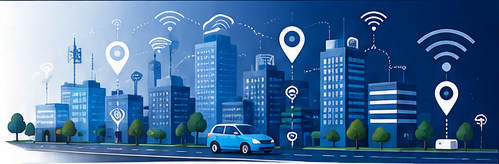
As Smart Cities become increasingly connected, thousands of IoT devices are being deployed in streets, buildings, vehicles, and public infrastructure.
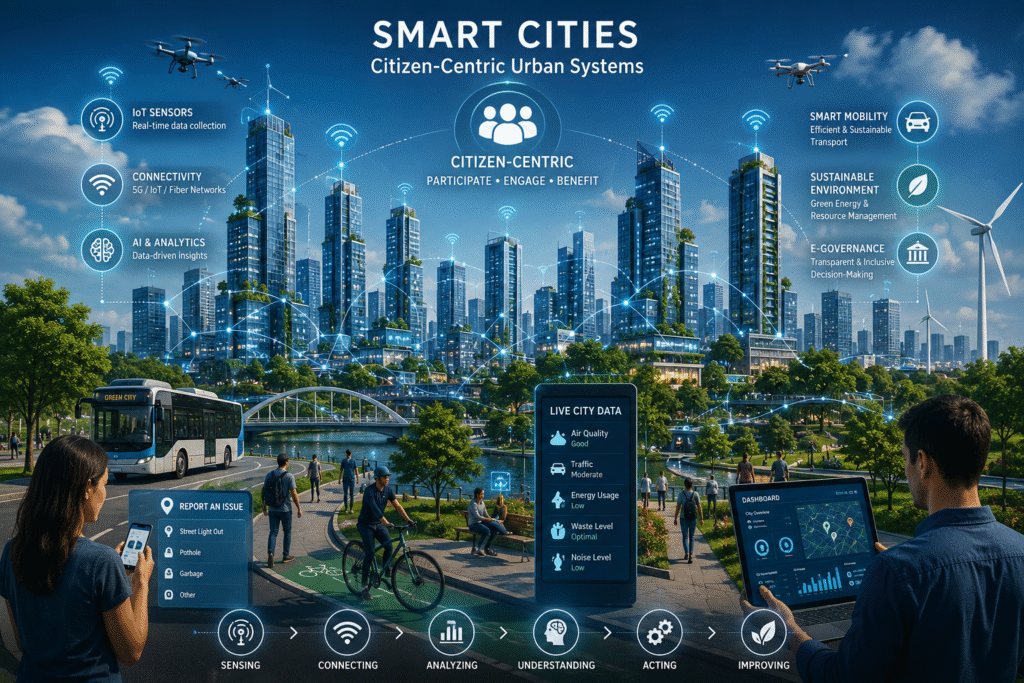
The concept of the Smart City has evolved considerably over the last two decades, moving from a primarily technology-oriented vision

What AI solutions can effectively support the missions of the public sector? To help answer this question, a team of

Introduction The evolution of digital city concepts is advancing toward a state of ubiquitous integration. So,a ubiquitous city (often abbreviated as

The Rise of Smart Cities A smart city is a city that uses technology and data-driven solutions to efficiently manage